



Humanoid robots mimic human actions and physical characteristics, revolutionizing the field of robotics. One of the most exciting robotic inventions, they replicate human motions and interact authentically.
Instead of being confined to science fiction, different types of humanoid robots are now being actively researched and used in a variety of industries, including healthcare and hospitality. So, breaking down these robots’ design and functioning is necessary to understand how they work. First, let’s clarify the true nature of humanoid robots.
Also Read: What Are Legged Robots? Examples, Definition and How it Works?
What Are Exactly Humanoid Robots?
Source: researchdive
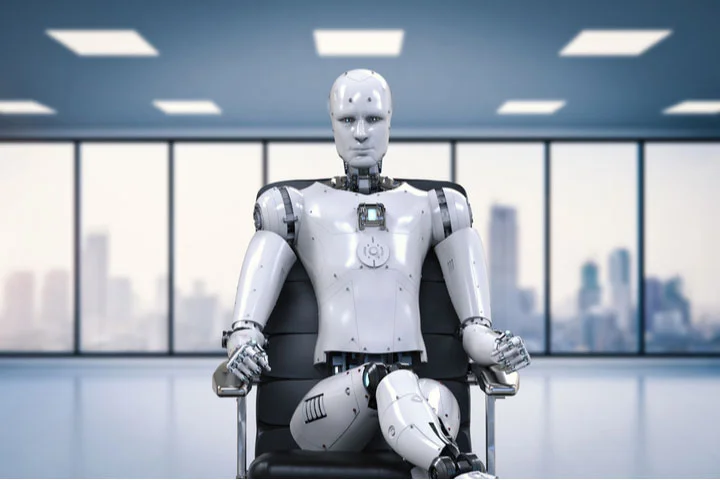
Humanoid robots mimic the form and movement of the human body. Sensors, actuators, and control systems enable them to perceive, speak, move, and perform human-like functions. Some have simple limbs and motion systems, while others have facial expressions that resemble humans and fake skin.
A humanoid robot should not only resemble a human but also engage with humans and their surroundings instinctively and naturally. They provide new means of automation, communication, and assistance, linking human-centric places and machines. In 2024, startups and established robot manufacturers teamed up with major AI developers to drive the success of AI robotics.
Also Read: How to Train a Robot with Motion Capture or Hand Gesture?
Exploring the Main Components of Humanoid Robots

Source: nextrongroup
After getting an idea of what humanoid robots are, let’s discuss some of their main components. These components of humanoid robots cooperate to make the robot capable of perceiving its environment, deciding, and acting efficiently.
- Sensors

Source: nextrongroup
Humanoid robots use sensors as their sensory organs to collect ambient information, which is essential for responsiveness and decision-making. Sensors that hear decipher sounds, while vision sensors detect objects and gestures. Touch sensors mimic human touch, and proximity sensors help avoid obstacles. Inertial Measurement Units (IMUs) monitor movement and balance to provide smooth, coordinated movements in unfamiliar or turbulent environments.
- Actuators
Actuators transform electrical energy into mechanical motion and serve as the muscles of humanoid robots. Robots are thus able to move their joints, limbs, and heads. For accuracy, electric motors are the best option among them. Pneumatic and hydraulic actuators deliver powerful motion, but their size limits their usage. Servo motors also provide precise angular movement, which is necessary for delicate and expressive gestures.
- Power Supply
A power supply is necessary for a humanoid robot to operate. Examples of this include rechargeable batteries and wired connections to an external power source. Battery-powered robots require good energy management to work for long periods and keep working well. So, depending on what they do, different types of humanoid robots may need other forms of power.
Also Read: Top 10 Chinese Humanoid Robots in 2025
- Control Systems

Source: nextrongroup
Actuators are guided by control systems, which are effectively the brain of the robot. Hence, they combine hardware and software to perform their work effectively. They move, maintain their posture, and coordinate sensor input and movements. Also, these robots learn and improve over time by using control systems that employ machine learning.
- Communication Modules
Humanoid robots utilize several communication protocols to engage with individuals or systems. For example, seamless connection is made possible via Bluetooth or Wi-Fi. Additionally, speakers and microphones make speech interactions easier. Besides, some robots include display to show emotions, messages, or graphic material, making communication easier for humans.
- Joint Mechanisms

Source: nextrongroup
Humanoid robots mimic the human body and feature joints that allow them to bend, twist, and rotate freely. Engineers make these joints move as similar to human joints as possible, often using servos or actuators. Furthermore, joints are key components of humanoid robots because they allow them to interact with humans in a realistic manner.
- Structural Frame
The robot’s frame holds its mechanical pieces in place and gives it shape. The robot’s intended use determines what materials are used for the structural frame. Some people employ aluminum and other lightweight metals, while others use plastic composites to make things more flexible. The frame also looks like the human skeleton since it has joints, limbs, and occasionally even fingers and toes.
- End Effectors
This refers to the components of the robot that engage in direct interaction with the surrounding environment, such as the hands or the tools. The robotic hand is the most frequent end effector used in humanoid robots. As a result, it can pick up, manipulate, or carry out tasks that need accuracy.
Also Read: Top 10 Robotics Skills Required for Engineering Career Growth
Use Cases of Humanoid Robots
Humanoid robots are becoming more and more widespread in many real-world applications, showing how useful and flexible they can be in a wide variety of fields.
- Education and Training
Humanoid robots may help educate or tutor in classrooms or training centers. Their looks are fascinating and make learning more pleasant, particularly for toddlers and those with special needs. So, numerous types of humanoid robots are produced to satisfy the demands of interactive teaching at different levels of education in the best way possible.
- Healthcare Assistance
Humanoid robots might help patients who have problems moving around, help them with daily tasks like taking their medicine, and even be friends with older people. They may be great caregivers in particular instances since they can understand and follow spoken commands.
- Customer Service
Hotels, airports, and shopping malls use humanoid robots to greet customers, give them instructions, and tell them about the products and services they may buy. They make the customer experience better while cutting down on the need for human workers to do the same things again and over.
- Research and Development
Labs often utilize humanoid robots to test novel robotic designs, machine learning algorithms, and artificial intelligence. They are perfect for researching human-robot interaction because of their human-like shape. Hence, in research, several types of humanoid robots are used to model various human interactions and behaviors.
- Entertainment
Humanoid robots are now used as performers in anything from live performances to visitor interactions at theme parks. Additionally, they can enthrall audiences of all ages with their acting, dancing, and singing.
- Hazardous Environment Tasks
Humanoid robots can perform essential inspections and rescue missions. They mimic human movements in dangerous environments, like nuclear power plants or disaster zones, ensuring both effectiveness and safety.
Conclusion
Humanoid robots are an advanced fusion of artificial intelligence, computers, and engineering. They use sensors, actuators, control systems, and more to produce functional, intuitive, and adaptive devices. Further, these robots are transforming industries, including healthcare, customer service, education, and even entertainment.
Humanoid robots should become ever more functional and realistic and incorporated into everyday life as technology develops. Therefore, future developments in components of humanoid robots will increase their efficiency, flexibility, and realistic interactions in many situations.
For more informations on robotics and AI, click on the links given below: