



Introduction
AI data centers are now the engine of the modern artificial intelligence revolution, boosting everything from language models to autonomous vehicles. At the beginning of 2026, World Data Center energy consumption represented about 55 GW of energy demand, with AI workloads designed to reach 84 GW by 2027. In the United States alone, the use of Data Center power jumped from 2024 for the 123GW expansion projected by 2035 — a thirtyfold increase.
The installation of massive GPU clusters, sometimes consuming hundreds of megawatts per place, demonstrates the magnitude of the investment by major technology companies. Data center campuses covering tens of thousands of square feet can consume up to 5GW, enough to feed five million families. Hyperscalers are projecting gigawatt-size facilities. For example, the Hyperion of the goal targets a capacity of 5 GW, while Prometheus will have 1 GW in 2026.
These huge numbers represent a maritime change in technological and infrastructure needs. While Google, Amazon, Meta, and xAI lead the charge to build these Goliath centers, they are also pioneers in cooling advances, power supply, and modular design. The regulation and capacity of the grid are left behind, inviting conversations about clean energy integration, water consumption, and climate footprint.
Also Read: Best 9 Ways to Detect AI-Generated Images with Easy Steps and FREE Tools
History
The origins of AI data centers date back to the early 2000s, when internet giants began to build large-scale server farms to host increasing amounts of digital data. Such initial facilities have been optimized to support research mechanisms, web hosting, and cloud-based storage systems. Although they were highly powerful, they did not have specialized architecture for artificial intelligence workloads, which require much higher densities of computing resources and an accelerated data transfer rate.
The transition to AI’s optimized infrastructure began approximately in mid-2011, when deep learning advances and neural networks led companies to implement graphic processing units (GPUs) and tensor processing units (TPUs) to accelerate training times. Conventional data centers have not been able to deal with the requirements of these AI models efficiently, which gave rise to AI data centers built for specific purposes like parallel processing, bandwidth network, and sophisticated refrigeration solutions.
In the early 2020s, hyperscalers like Google, Microsoft, and Amazon began to redo their infrastructure to accommodate huge machine learning models. These IA data centers brought specialized chips, modular designs, and integrated renewable energy to respond to increasing efficiency demands. Shortly thereafter, specialized AI campuses appeared, often based on hundreds of megawatts and containing millions of AI processors.
The advent of Generative AI in late 2022 only accelerated her even more. With the integration of large language models and generative algorithms, the demand for workloads that intensively use GPUs has exploded. This innovation inaugurated a new era of infrastructure design, in which AI is the main driver of how applications and data centers are designed, built, and optimized.
Today, AI data centers are one of the most sophisticated engineering achievements in the technical industry, designed to include learning, changing, and decisive models in different fields.
Also Read: How to Use Midjourney AI to Create Stunning Images (2025)
What are AI Data Centers?
Source: freepik
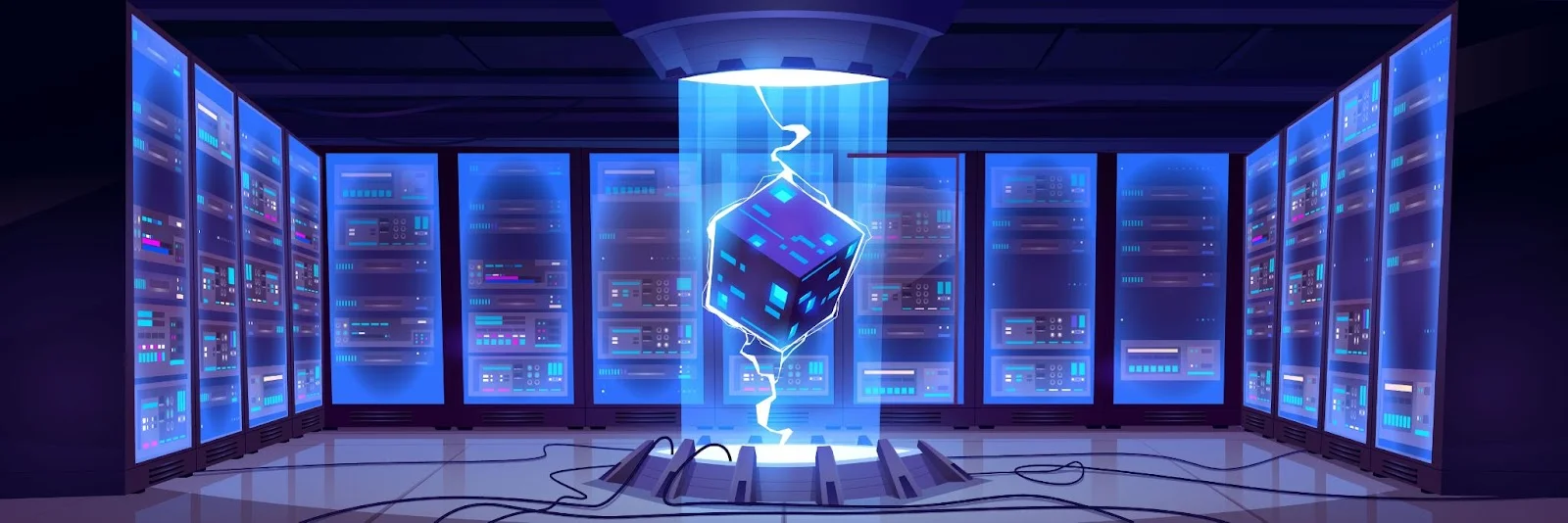
An AI data center is a dedicated installation created to meet artificial intelligence workloads using high-performance computing equipment. While conventional data centers store and predominantly process general-use data, AI data centers are created specifically to meet intensive computing activities such as deep learning, natural language processing, and training large-scale models.
In the heart of an AI data center are thousands of linked processors – mainly GPUs (graphic processing units) and specialized AI accelerators such as TPUs or ASICs. These chips provide parallel processing on a record scale, required to train neural networks with billions or even trillions of parameters.
What differentiates AI data centers is that they can move large volumes of data at high speed, maintain ideal thermal conditions even under heavy loads, and provide low latency for real-time inference operations. Their design is also usually modular, allowing companies to scale real-time computing clusters without having to redesign the whole thing.
These installations also include tailored software stacks, orchestration structures, and network-optimized network structures such as Tensorflow, Pytorch, and JAX. State-of-the-art cooling technologies, such as liquid immersion and direct chip cooling, are often incorporated into the configuration to manage the heat produced by highly concentrated computer units.
AI data centers are used for various purposes in all industries, from auxiliary recommendation engines and autonomous vehicles to drug detection and feeding weather forecasts. As AI progresses, these centers will only expand in scale, sophistication, and strategic value.
Also Read: 13 Best AI Tools for Writing Essays for Students (FREE and Paid)
10 Largest AI Data Centers
The following is a ranked list of the ten largest AI data centers by 2026 by space, power capacity, and GPU infrastructure. These data centers are the height of AI infrastructure currently:
| Rank | Facility & Location | Size (sq ft) | Power Capacity | Notable Features |
| 1 | China Telecom Info Park (Inner Mongolia) | 10.7 million | ~150 MW | World’s largest, supports telecom, cloud, government use |
| 2 | Citadel Campus – Switch (Nevada, USA) | 7.75 million | 130 MW | Tahoe Reno 1 component, Tier IV hyperscale site |
| 3 | China Mobile / Harbin (China) | ~7.75 million | — | Second-largest in China, massive rack capacity |
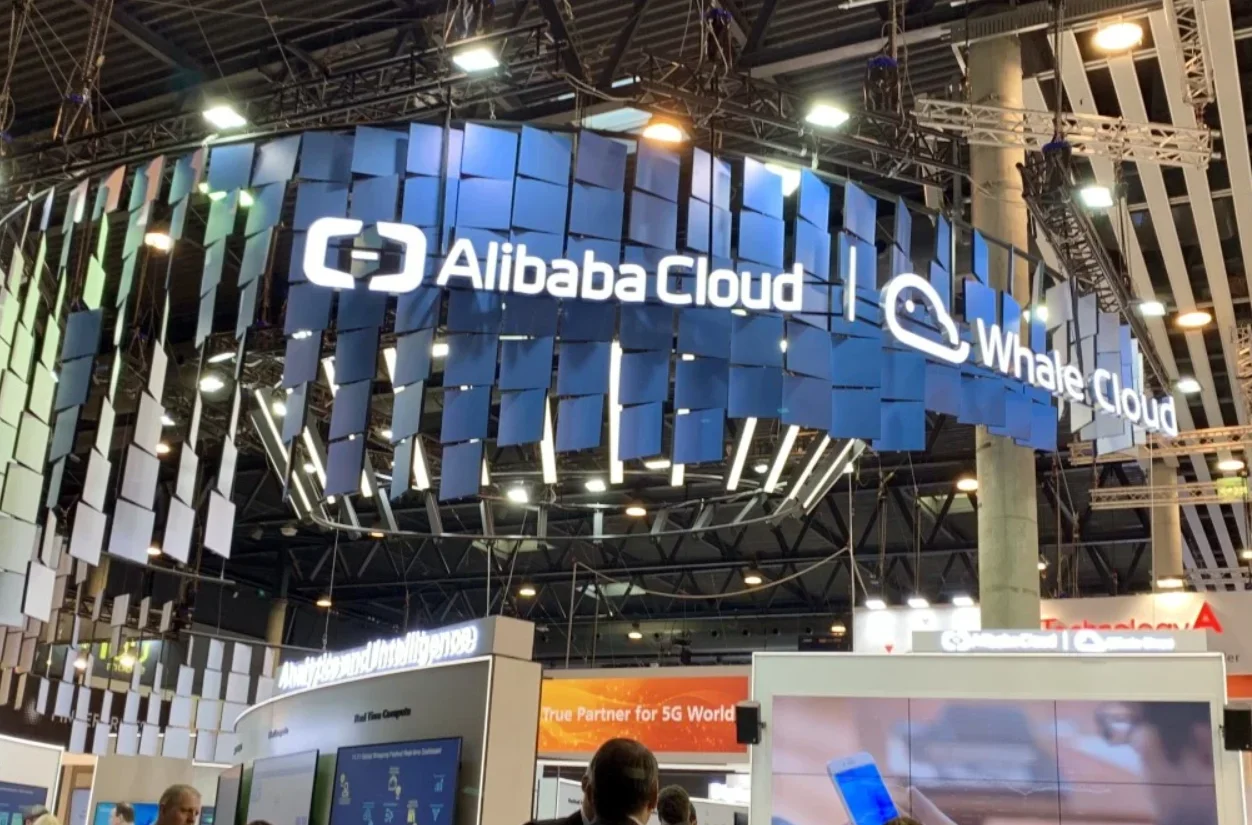
| 4 | Alibaba Cloud Zhangbai (Hebei, China) | 7.1 million?* | 37 MW | 52 modules, 50,000 racks, advanced cooling |
| 5 | Stargate UAE – OpenAI/UAE (Abu Dhabi) | — | 1 GW cluster | Massive AI GPU cluster, multinational collaboration |
| 6 | CoreWeave – Plano, Texas, USA | 450,000 sq ft | — | 3,500+ H100 GPUs, fastest AI supercomputer |
| 7 | xAI Colossus – Memphis, USA | — | 150 MW | Multi-million gallons/day water, supercomputer-scale GPU array |
| 8 | ABCI 3.0 – AIST (Birmingham, Japan) | — | — | 6.22 exaflops FP16, 6,128 H200 GPUs |
| 9 | Selene – NVIDIA (USA) | — | — | 63.46 petaflops, DGX Superpod, top MLPerf industrial system |
| 10 | Alps HPE Cray EX254n – ETH/CSCS (Switzerland) | — | — | 270 petaflops, Grace Hopper GH200 chips |
The size and scope of these AI data centers are impressive. China Telecom’s large campus and the new facilities of Prometheus and Hyperion of the goal demonstrate the speed with which we should marry computing, refrigeration, and connectivity to state-of-the-art AI.
Source: scmp
How Does an AI Data Center Work?
AI data centers exceed the limits of computer infrastructure. They collect specific application hardware, effective cooling, and a modular design. They also ensure high-speed networks to handle large AI workloads. Here is a list of its most important technical components:
Also Read: List of Veo 3 Alternative AI Video Generator Tools
GPU and Accelerator Clusters
AI accelerators and GPU clusters are key to every AI data center. Coreweave, located in Texas, and NVIDIA Selene use either NVIDIA H100 or GH200 Graceper GPUs. These systems are managed by NVIDIA’s NVLink and Infiniband technologies. This interconnection speeds up deep learning model training by enabling parallel processing across thousands of accelerators.
Power and Energy Management
These facilities need hundreds of gigawatt hours of electricity for mega-campuses. Examples include the Stargate in the United Arab Emirates and Hyperion. To manage this demand, operators use direct substation feeds and high-voltage transformers on site. They use redundant energy systems, including UPS clusters and diesel generators, to ensure smooth operations during grid failures.
Cooling systems
Aggressive cooling is necessary to contain thermal stress from densely packed AI equipment. Some sites use liquid cooling straight to the chip, where soft drinks flow directly on processors. Immersion cooling submerges components in a non-conductive fluid for even heat dispersion. Systems combine this method with unique HVAC systems and water loops to reuse energy and maintain temperatures.
Modular and Scalable Design
AI data centers are built in modular pods. These pods are uniform units containing racks, chillers, power units, and network components. This design allows for easy scaling. Operators can double computing capacity by adding more pods. They can do this without interrupting clusters or existing infrastructure.
Network and Data Flow
The high-performance network is essential. Data centers with petabit-level backbone mesh fabrics often use fiber optic rings. They also rely on multi-100 Gbps uplinks and spine topologies. NVLINK and PIE GEN5 links connect GPUs for fast AI workloads, reducing latency.
Sustainability and Energy Sources
Many AI centers are using renewable energy because they need a lot of power. In Europe and North America, some facilities mix campuses with solar farms, wind turbines, and battery storage.. Heat recovery units break down waste in adjacent structures or district heating systems. Green certifications like LEED or Energy Star are now routine.
Example of an AI Data Center
One of the most sophisticated AI data centers in the world is the Data Center Coreweave in Plano, Texas. Specifically designed to accommodate the wide-scale AI and training, the high-efficiency liquid cooling, the installation is efficient, including the Nvidia H100, all connected by a high-speed InfiniBand network.
It provides computer capacity equal to the world’s highest-performance AI supercomputers and accommodates applications such as real-time video creation, natural language models, and AI simulation. With modular pods and high-efficiency liquid cooling, installation is efficient in high thermal loads. CoreWeave’s architecture is emblematic of a new trend in high-density GPU Computing infrastructure, a very low-latency network, and scalable settings optimized explicitly for machine learning.
Conclusion
AI data centers are the pillars of current artificial intelligence. They allow complex calculations previously impossible. These massive centers are more than server farms. They consist of thousands of interconnected GPUS, cooling mechanisms and high-speed networks. They process data, train models, and offer information to different industries.
The world’s top ten centers in 2026 illustrate how advanced this technology has become. China’s huge complexes and massive projects in America and the Middle East represent a new generation in computing. As AI continues to grow, these intelligent infrastructures will remain the focal point of their advancement.
For more informations on AI, click on the links given below: