Google has unveiled Ironwood, its seventh-generation Tensor Processing Unit (TPU), designed for AI models. With 24 times the processing capability of any other supercomputer, it supports the "age of inference" and sophisticated AI models like Gemini 2.5 Flash and Gemini 2.5 Pro. It also offers generative media models.
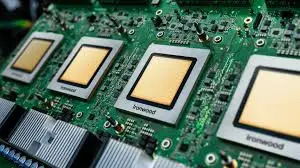
Google releases a new AI processor to crush competition, 24 times quicker than supercomputers
AI is the newest and most popular technology sweeping the globe. As the AI era develops, it is understandable to observe the biggest IT companies experimenting with this technology and discovering innovations.
The most recent of these digital behemoths is Google, which just announced Ironwood, its most effective Tensor Processing Unit (TPU), created especially for AI models.
The purpose of this TPU is to let AI models operate more quickly and intelligently, particularly when performing tasks that call for reasoning or prediction. This specific behavior is referred to as “inferencing.” Unlike its predecessors, which were made for training AI models from scratch, Ironwood is expressly made for such jobs.
Also Read: What is Gemini 2.5 Pro? Breaking Down Google’s Smartest, Fastest, and Advanced AI Model
When used at scale, this seventh-generation TPU, which was unveiled at Google Cloud Next ’25, provides 24 times the processing capability of any other supercomputer worldwide.
During a virtual press conference before the event, Google Vice President and General Manager of ML, Systems, and Cloud AI Amin Vahdat stated, “Ironwood is built to support this next phase of generative AI and its tremendous computational and communication requirements.”
He referred to this as the “age of inference,” in which AI bots will proactively generate and retrieve data to cooperatively give answers and insights rather than just data.
Ironwood has several outstanding technological features. When scaled to 9,216 processors per pod, it can provide 42.5 exaflops of computational power. These enormous figures outweigh the El Capitan’s 1.7 exaflops, the fastest supercomputer in the world.
192 GB of High Bandwidth Memory (HBM) is another feature included with Ironwood. Compared to Trillium, Google’s previous generation TPU, which was revealed last year, it is six times more. In terms of memory bandwidth, Ironwood can also achieve 7.2 terabits per second per chip, which is 4.5 times faster than Trillium.
“We deliver significantly more capacity per watt for customer workloads at a time when available power is one of the constraints for delivering AI capabilities,” Vahdat said.
Additionally, Google has identified Ironwood as the basis for all of its sophisticated AI models, including Gemini 2.5.
Google unveiled Gemini 2.5 Flash, a less expensive variant of its flagship model that adjusts its reasoning level according to the prompt’s complexity, at the conference. Flash is designed for quick, daily use when speed is crucial, whereas Gemini 2.5 Pro is intended for more complex activities like financial modeling and drug development.
Additionally, the company demonstrated its full range of generative media models, including text-to-image, text-to-video, and the recently released Lyria text-to-music tool. In a live demonstration, the models were combined to create a concert promotional video.
Also Read: Telangana and Google sign agreement to speed up AI-driven state transformation
Even while Ironwood is currently the talk of the town, it is only a single component of Google’s broader AI infrastructure strategy. Additionally, the corporation revealed Cloud WAN, a managed wide area network that enables companies to directly access Google’s network infrastructure.
“Cloud WAN is a fully managed, feasible, and secure enterprise networking backbone that reduces total cost of ownership by the same 40% and improves network performance by up to 40%,” Vahdat stated.
This video demonstrates multimodal AI’s increasing strength and promise to revolutionize creative workflows in a variety of industries.
This post was last modified on April 10, 2025 8:23 pm
Pick your task, get the best AI model for it — images, video, slides, research,…
Learn what Agentic AI is, how it works, and how it differs from Generative AI.…
Discover the 13 best free online vocal remover AI tools for 2026, designed to isolate…
Explore the top 13 yield farming platforms for 2026, featuring secure, trusted, and high-APY crypto…
Explore the best AI learning platforms for 2026, including Coursera, edX, Udacity, and more. Learn…
Explore the 13 best Polygon wallets in 2026, comparing security, DeFi access, hardware and mobile…